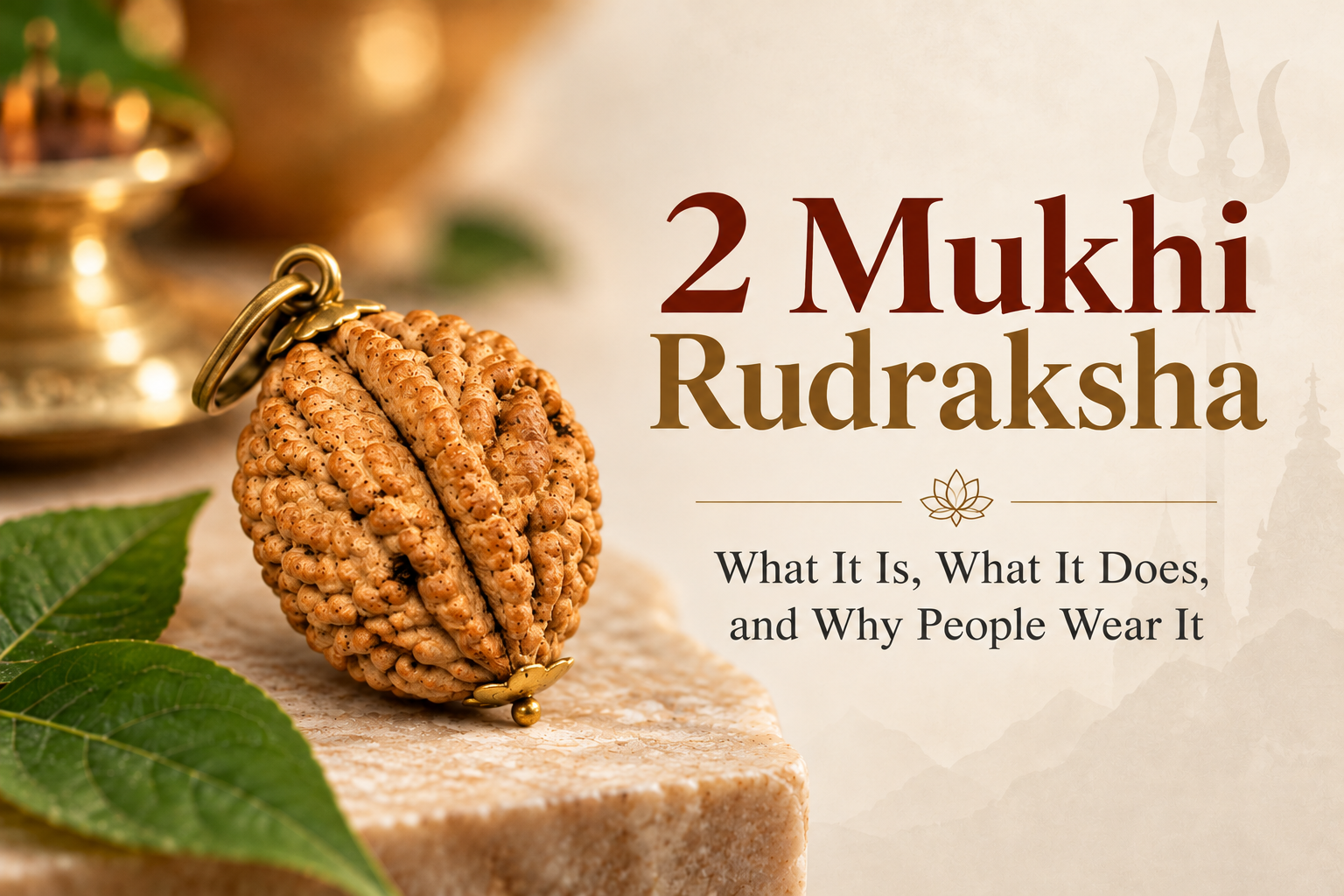

Some things carry more weight than their size suggests. 2 Mukhi Rudraksha, a two-faced rudraksha bead, is one of them. Small enough to hold between two fingers, it has been worn for centuries by people who believe it settles something in them that nothing else quite reaches. If you’re considering buying one and want to know what you’re actually getting, this is the right place to start.
Rudraksha beads are categorized by the number of mukhis, faces, or natural clefts, that run along their surface. Do mukhi means two faces. Each bead grows this way on the Elaeocarpus ganitrus tree, found mainly in Nepal, Indonesia, and parts of India. The two-faced variety is associated with Ardhanarishvara, the combined form of Shiva and Parvati, which is why it’s traditionally linked to balance, between thought and emotion, between two people in a relationship, between the self and the world outside it.
The 2 Mukhi Rudraksha holds a special place in Hindu spirituality and is traditionally associated with Lord Shiva and Goddess Parvati, symbolising unity, harmony, and balance. According to spiritual beliefs, wearing this sacred bead may help encourage emotional balance, strengthen relationships, promote inner peace, and support a deeper sense of connection with oneself and others.
It is also associated with the Ardhanarishvara form, representing the harmonious union of masculine and feminine energies. Many devotees wear the 2 Mukhi Rudraksha during meditation, prayer, and daily spiritual practices to cultivate mindfulness and positivity. These benefits are rooted in traditional beliefs and are not scientifically established medical effects.
The claims around rudraksha beads range from the carefully considered to the wildly overstated, depending on where you’re reading. Here’s what the traditional texts and consistent wearer experience actually point to for the do mukhi rudraksha specifically.
It’s most commonly associated with relationships. People wear it during periods of conflict, with a partner, a family member, a business associate, and report a settling of reactive emotion that makes conversation easier. Whether that’s the bead working or the intention behind wearing it, the outcome is what most buyers are after.
It’s also worn by people dealing with scattered focus. The two-faced bead is said to bring the mind to a single point rather than letting it run in several directions at once. For anyone working through a demanding period professionally or personally, that’s the draw.
On the physical side, traditional Ayurvedic texts associate do mukhi rudraksha with the left eye and the moon, and some wearers report improvement in sleep quality and stress-related symptoms over time. These aren’t medical claims, they’re observational patterns that have held across a long enough period to be worth noting.
Do mukhi rudraksha is worn as a pendant or as part of a mala. Silver and gold are the traditional capping metals, though unstrung beads are also worn directly on a thread. Monday is considered the right day to begin wearing it, ideally after a simple prayer or intention-setting in the morning.
The bead should rest against the skin rather than over clothing. Most people wear it around the neck; some wear it on the wrist as part of a bracelet. Either works. What matters more than placement is consistency, the effects, to the extent they come, build with regular wear rather than showing up immediately.
Avoid wearing it during funerals or while consuming non-vegetarian food and alcohol, according to traditional guidelines. These aren’t hard rules so much as practices that wearers across traditions have observed.
This is where most buyers go wrong. The rudraksha market has a significant counterfeit problem. Plastic beads, resin casts, and chemically treated seeds are sold regularly as genuine do mukhi rudraksha, often at prices that seem reasonable precisely because they’re not the real thing.
A genuine two-faced rudraksha has naturally defined mukhis that run from the top of the bead to the bottom. The surface texture is rough and uneven in a way that’s hard to replicate convincingly. When placed in water, a real bead sinks. The mukhis should be clearly countable under light. Ask the seller for a certificate of authenticity and check whether they offer any verification process — reputable sellers will not hesitate.
Nepal-origin do mukhi rudraksha beads tend to be larger and more distinctly formed than Indonesian ones. Both are genuine; the difference is size and density rather than quality. Indonesian beads suit those who prefer a smaller, lighter pendant.
Do mukhi rudraksha is not a quick fix and sellers who position it that way are worth avoiding. What it offers, for those who wear it with some consistency and intention, is a quiet steadiness that’s hard to source elsewhere. If that’s what you’re looking for, it’s worth buying well rather than buying cheap.
